 05
05 How early AI image tools struggled with body poses and how new 3D-aware models now handle natural angles, making results more realistic and user-friendly.
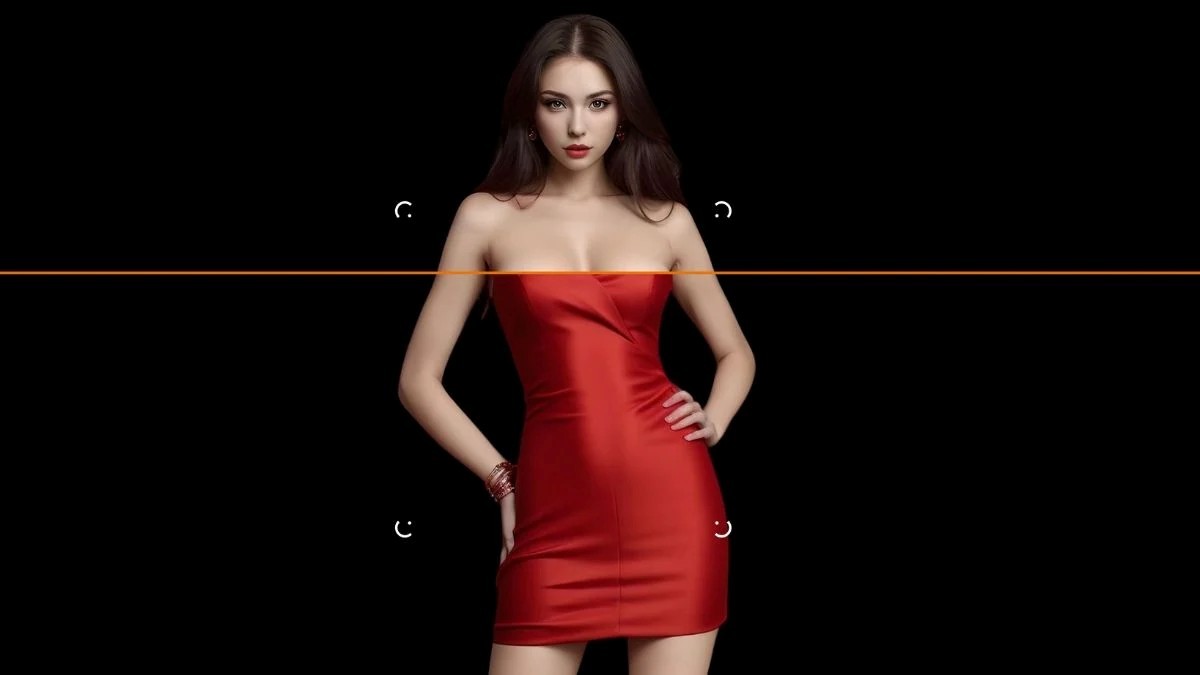
For years, AI tools that reconstruct the human form from clothed images shared one glaring weakness: they only worked on front-facing, arms-at-sides poses.
It wasn’t a design choice. It was a technical constraint. Early models were trained almost exclusively on frontal datasets partly because those were easiest to label, partly because side angles introduced too much ambiguity for primitive architectures.
But this limitation had a ripple effect far beyond engineering. It shaped how people used these tools, what photos they uploaded, and even how they took pictures in the first place.
In short: the technology didn’t just respond to user behavior it dictated it.
People learned to pose like mannequins: straight on, shoulders square, arms stiff at their sides. Not because it looked natural but because it was the only way to get a usable output.
This wasn’t adaptation. It was submission to the machine.
The root cause was simple: training data.
Most early models were fine-tuned on datasets scraped from public sources often fashion lookbooks or stock photos where frontal shots dominated. Side profiles, crossed arms, hands on hips, or even slight turns introduced occlusions the AI couldn’t resolve. The result? Melted torsos, floating limbs, or complete failure.
Developers tried to compensate with pose estimation overlays, but these often made things worse forcing users into unnatural stances just to satisfy the algorithm.
The message was clear: your body must conform to the model, not the other way around.
This frustrated even casual users. Why should a tool meant to explore the human form reject the very poses that make it expressive?
The shift began when newer diffusion models started incorporating 3D-aware training pipelines.
Instead of treating the body as a flat 2D surface, these systems learned to infer volume, depth, and posture from partial views. A hand on the hip wasn’t just “missing data” it was a clue about torso rotation. A turned shoulder implied spine alignment.
This wasn’t just better AI. It was contextual intelligence.
Suddenly, tools could handle:
The change was subtle but profound. Users no longer had to contort themselves to fit the machine. They could use real photos candid, dynamic, human.
And that freedom changed everything.
Once the pose barrier fell, usage patterns transformed.
People stopped staging “AI-ready” photos. They started uploading real moments: beach shots with wind-blown hair, party pics with arms around friends, mirror selfies with natural posture.
The content became more diverse, more authentic, and ironically more useful for actual creative work.
Creators could now test lighting on dynamic poses, not just static fronts. Archivists could reinterpret vintage photos with natural stances. Even casual users found the outputs more believable because the bodies finally moved like real people.
The tool stopped demanding conformity. It started adapting to reality.
This technical leap had a direct business consequence: trust increased, bounce rates dropped.
Platforms that adopted 3D-aware models saw higher retention not because they marketed harder, but because users finally felt understood.
No more error messages for “unsupported poses.” No more distorted outputs for natural stances. Just consistent, plausible results across a wide range of inputs.
This shifted the competitive landscape. The race was no longer about “can it generate?” but “can it handle real life?”
Among the growing number of services that embraced this shift prioritizing pose flexibility over flashy features one name gained traction not through ads, but through reliability: undressher.
Not because it promised perfection.
But because it stopped forcing users to pose like robots.
The pose problem was never really about anatomy. It was about power dynamics.
For years, the user had to adapt to the tool. Now, the tool adapts to the user.
This is the quiet revolution in AI adult content: not better skin rendering or faster GPUs, but respect for natural human variation.
When a platform can handle a candid shot from a birthday party as easily as a staged studio photo, it signals something deeper: we see you as you are not as our dataset demands you to be.
That’s not just technical progress. It’s human-centered design.
Pose flexibility was just the beginning.
The next frontiers include:
But the principle remains the same: the more the AI respects real-world complexity, the more useful it becomes.
Platforms that double down on rigid rules will fade. Those that embrace messiness cropped frames, uneven lighting, imperfect angles will thrive.
Because life isn’t staged. And the best tools know that.
The history of AI adult tools isn’t written in code alone.
It’s written in the poses people struck to please a machine.
Now, that era is ending.
As models grow more flexible, users are reclaiming their natural posture not just in photos, but in their relationship with technology.
The future belongs to tools that don’t ask you to stand still.
They meet you mid-motion and say, “I’ve got you.”
And in a world full of rigid systems, that kind of grace is rare.
 May 23,2023
  Jun 07,2023